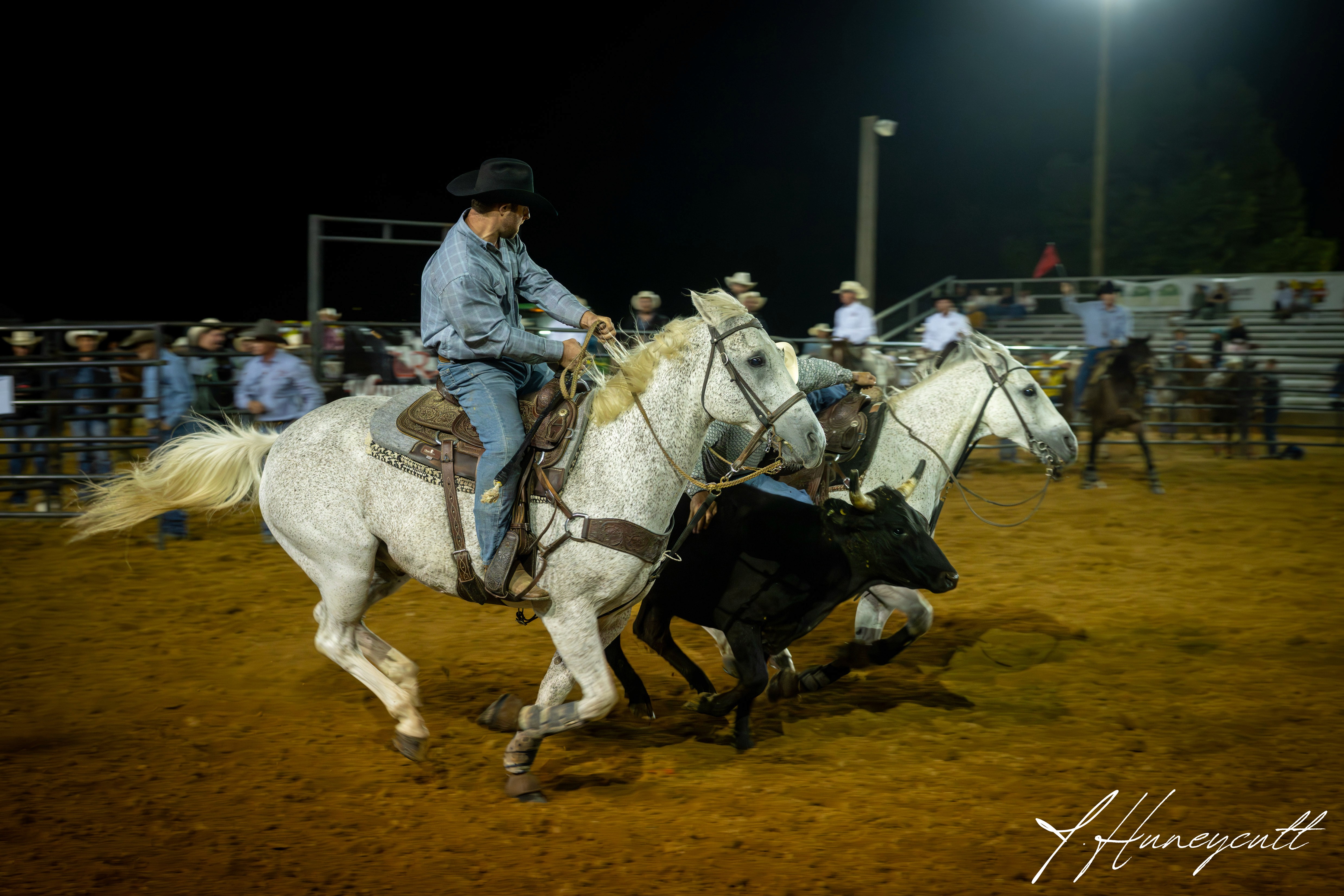
Team roping is the only rodeo event where two competitors work together on the same run.
One ropes the head. One ropes the heels. Fastest clean time wins.
At the River City Rodeo, team roping is one of the quickest events in the arena — and one of the most technical. Here’s what to know before you watch.
The Basics: Header and Healer
Each team has two riders with clearly defined roles.
The Header
Leaves the box first
Ropes the steer’s horns or neck
Turns the steer to set up the next throw
The Heeler
Follows behind the header
Ropes the steer’s hind legs
Stops their horse and pulls the rope tight
The clock starts when the barrier releases and stops when:
Both ropers have caught legally
The horses are facing each other
The ropes are tight
At higher levels of competition, winning runs are often under five seconds.
What Makes a Good Team Roping Run?
A successful run depends on precision and timing from both riders and both horses.
A clean start without breaking the barrier
A quick, accurate head catch
A sharp, controlled turn from the header
A well-timed heel shot
Horses that stop and back smoothly to tighten the ropes
If any part of the run is off, even slightly, time increases or penalties are added.
Team Roping Rules and Penalties
Team roping is a timed event, but penalties can change the final result.
10-Second Penalty
Breaking the barrier (leaving before the steer gets a head start)
5-Second Penalty
Heeler catches only one hind leg
No Time
Missed catch
Illegal catch
Legal head catches include:
Both horns
Half head
Around the neck
Heelers must rope both hind legs cleanly to avoid a penalty.
What To Watch For at the River City Rodeo
If you are watching team roping in Evansville at the River City Rodeo, pay attention to these details:
How quickly the header gains control of the steer
How tight and efficient the turn is
Whether the heeler waits for the steer’s legs to fully extend
How smoothly both horses stop and face each other
Runs that look controlled and efficient typically result in faster times and fewer penalties.
Where Team Roping Comes From
Team roping originated from real ranch work. Two riders would rope cattle together when treating or branding them, making the process safer and more controlled.
Modern rodeo keeps those same skills — speed, coordination, and accuracy — but places them against the clock in a competitive setting.
See Team Roping Live at the River City Rodeo
Team roping happens quickly, with each run lasting only a few seconds. Every movement is deliberate and practiced.
If you are attending the River City Rodeo, team roping is one event you will want to watch closely from start to finish.